Over the past 12 to 18 months, one battery brand has become an increasingly common choice for AG Solar customers across the Sutherland Shire, Southern Sydney, Wollongong and the Illawarra:
Sigenergy.
Since the lead-up to the Australian Government’s Cheaper Home Batteries Program in 2025, we have designed and installed Sigenergy systems for hundreds of homeowners.
And there is a reason it has become such a popular choice.
Sigenergy isn’t necessarily the right battery for every home – we also work extensively with Tesla, Fronius and Sungrow – but its combination of flexibility, scalability, single-phase and three-phase options, compact design and sophisticated energy management makes it particularly well suited to many of the homes we work with.
So what makes Sigenergy different, and when might we recommend it?
First, what is Sigenergy?
Sigenergy’s residential energy platform is called SigenStor. Rather than being simply a battery attached to an inverter, SigenStor has been designed as an integrated home-energy platform combining battery storage, inverter technology and energy management within one ecosystem.
Depending on the system configuration, it can integrate solar generation, battery storage, home loads, the electricity grid and even EV charging.
The system is modular and stackable, with single-phase and three-phase configurations available.
That flexibility is one of the main reasons we use it so frequently.
Why AG Solar installs so much Sigenergy
At AG Solar, we don’t start a battery consultation by deciding which product we’re going to sell.
We start with the property.
We look at:
- how much electricity the household uses;
- when that electricity is being consumed;
- existing solar production;
- available roof space;
- whether the home is single-phase or three-phase;
- evening and overnight loads;
- backup expectations;
- electricity tariffs;
- future EVs or electrification; and
- what the homeowner actually wants the system to achieve.
Once we understand those things, we work backwards into the appropriate system.
For a large number of homes we assess throughout the Sutherland Shire, Southern Sydney, Wollongong and the Illawarra, Sigenergy ends up being a very good fit.
1. Flexible battery sizing
This is probably Sigenergy’s biggest practical advantage.
Not every household neatly requires 10 kWh, 20 kWh or 30 kWh of usable storage.
One family might need something relatively modest. Another might have high evening consumption, a pool, electric hot water and two EVs.
Sigenergy’s modular architecture allows us to build the battery system in increments rather than forcing every household into one fixed battery size.
The current platform supports modular battery packs that can be combined within the system, giving us much finer control over the amount of storage we design into a home.
From a system-design perspective, that is extremely useful. It means we can get closer to the amount of storage the household actually needs rather than significantly under- or oversizing the system.
2. It's easy to expand later
This is another reason customers like Sigenergy.
Your electricity requirements today may not be your electricity requirements in five years.
You might add:
- an EV;
- a second EV;
- heat-pump hot water;
- induction cooking;
- more air conditioning;
- a pool or spa; or
- an extension to the home.
With a modular battery system, additional capacity can often be incorporated into the existing platform rather than starting again.
Sigenergy has designed the platform so battery modules can be stacked and the system can be expanded as requirements change. In many suitable installations, adding another compatible module later can be a relatively straightforward exercise compared with redesigning the entire system.
We have found this particularly valuable for homeowners who know their electricity consumption is likely to grow but don’t necessarily want to buy all of that future capacity on day one.
A practical example:
Imagine a family installing solar and a battery today.
Their current electricity profile suggests they don’t need an enormous battery.
But they also know they intend to purchase an EV within two years.
Rather than significantly oversizing today’s system, we may recommend a sensible initial Sigenergy configuration with the ability to add additional storage later.
That allows the investment to grow with the home.
3. Sigenergy works particularly well for three-phase homes
This has become increasingly important.
Many newer homes – and many larger or heavily electrified homes throughout the Sutherland Shire, Southern Sydney and the Illawarra – now have three-phase electricity.
That may be because of:
- larger air-conditioning systems;
- pools;
- EV chargers;
- electric cooking;
- larger homes; or
- generally higher electrical demand.
Sigenergy offers dedicated single-phase and three-phase solutions across its residential platform.
That gives us considerable flexibility when we’re designing larger residential systems.
Three-phase doesn’t automatically mean Sigenergy is the right answer.
But when we assess a three-phase home with substantial solar, battery and backup requirements, SigenStor is frequently one of the first platforms we consider.
4. It's physically compact and easy to integrate into a home
Battery location matters more than many people realise.
A battery isn’t something you’re simply putting in a cupboard.
There are electrical standards, manufacturer requirements, access requirements and safety clearances that need to be considered.
And homeowners understandably care about what the finished installation looks like.
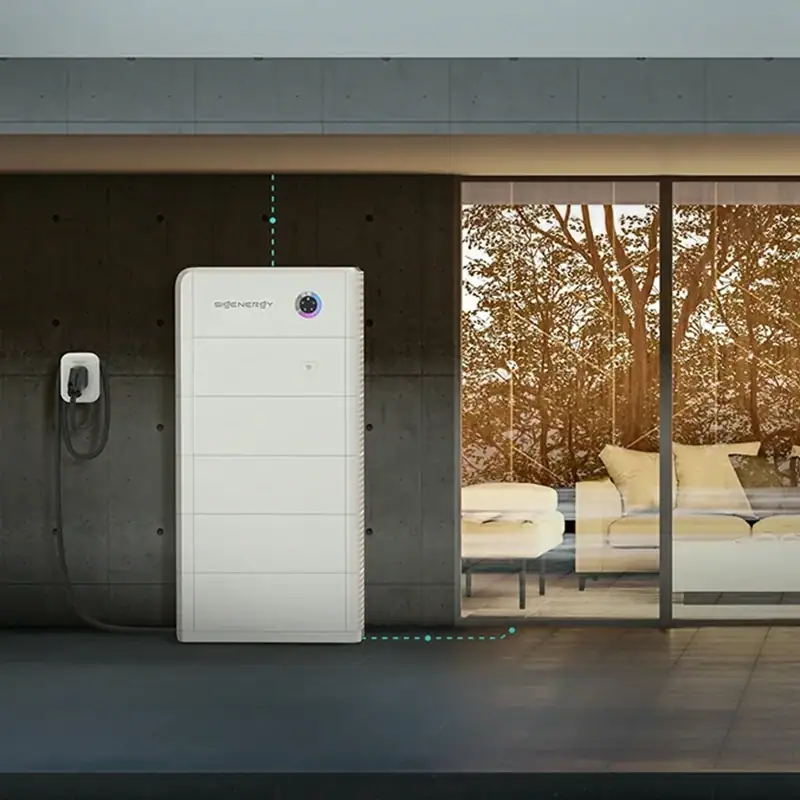
SigenStor’s batteries stack vertically, meaning substantial storage capacity can be installed within a relatively compact footprint.
For us as installers, that’s useful.
For the homeowner, it can mean the difference between a battery system dominating an area and one that can be integrated much more neatly into the property.
At AG Solar, we put a lot of emphasis on equipment positioning, hidden cabling where practical and making the finished installation look deliberate rather than simply attached to the house wherever it was easiest.
5. The system is designed around future home energy use
Another attraction of Sigenergy is that it isn’t just designed around today’s solar-and-battery market.
The SigenStor platform can incorporate EV charging options and has been designed around the broader concept of managing energy throughout the home.
That matters because residential energy use is changing.
The home of the future is increasingly likely to have:
Solar + Battery + EV + Electric Hot Water + Electric Cooking + Smart Energy Management
rather than simply:
Solar panels on the roof.
For homeowners already moving towards an all-electric home, choosing equipment designed around that future can make sense.
6. Safety and battery quality matter
Battery price is important. But we don’t believe home battery storage is an area where homeowners should simply choose the cheapest product available.
A home battery charges and discharges thousands of times and may remain attached to your property for well over a decade.
Sigenergy uses lithium iron phosphate – LFP – battery chemistry and incorporates multiple layers of battery protection within the SigenStor platform.
This is one reason AG Solar tends to focus on established, higher-quality battery platforms rather than competing heavily at the cheapest end of the market.
Our objective isn’t simply to install a battery that works on day one.
We want to install systems we’re comfortable supporting for many years afterwards.
7. The software is an important part of the system
Modern batteries are increasingly software-driven. The mySigen app allows homeowners to monitor their solar generation, household consumption, battery and grid interaction and manage their broader energy system.
For homeowners, that visibility can be extremely useful.
Instead of simply receiving an electricity bill at the end of the quarter, you can see what your home is actually doing.
That can help people change their behaviour, understand major loads and make better use of their solar and battery investment.
What does a typical Sigenergy system look like?
There isn’t really a “typical” system – and that’s part of the attraction. Here are three simplified examples.
Scenario 1: Existing solar, adding a battery
A homeowner already has a good solar system but exports substantial excess electricity during the day and buys electricity back from the grid during the evening.
We may retain the existing solar system and design a Sigenergy battery solution around the household’s evening and overnight consumption.
The objective is simple: store more of the energy they’re already generating and use it later.
Scenario 2: New solar + battery on a three-phase home
A family has a larger three-phase home with air conditioning, pool equipment and significant evening demand.
They’re also considering an EV.
Here we might design the solar array, three-phase energy controller and battery capacity together.
Instead of treating the solar and battery as separate products, we design one complete home-energy system.
Scenario 3: Start smaller and expand later
A household wants a battery now but expects consumption to increase significantly once an EV arrives.
Rather than purchasing substantially more capacity than they currently need, a modular Sigenergy solution can provide an appropriate starting point while maintaining a pathway to expand later.
Different property.
Different energy profile.
Different solution.
That’s exactly how battery design should work.
Is Sigenergy better than Tesla, Fronius or Sungrow?
Not universally.
And we don’t think customers should be told that one battery is automatically “the best”.
Tesla Powerwall has particular strengths.
So do Fronius and Sungrow.
Sigenergy’s strengths tend to be:
flexibility, modularity, three-phase capability, integrated design, compact installation and future scalability.
For many homes, those advantages make it a very compelling solution.
For others, another product may be better.
Our job is to understand the difference.
Experience matters when designing a Sigenergy system
Since 2025, AG Solar has designed and installed hundreds of Sigenergy battery systems for homeowners, with a particularly strong customer base throughout the Sutherland Shire, Southern Sydney, Wollongong and the Illawarra.
Based in Caringbah, our sales, design, in-house installation and service teams work with these systems every day. That hands-on experience gives us a practical understanding of what works across different homes, roof layouts, switchboards, phase configurations and energy-use profiles.
A good result depends on:
- correctly sizing the battery;
- correctly sizing the solar;
- selecting the appropriate inverter or energy controller;
- understanding single-phase versus three-phase supply;
- designing backup correctly;
- choosing an appropriate battery location;
- configuring the software; and
- supporting the system after installation.
We’re not simply supplying equipment.
We’re designing and supporting a complete home-energy solution.
Considering a Sigenergy battery?
If you’re researching Sigenergy batteries in the Sutherland Shire, Southern Sydney, Wollongong or the Illawarra, speak with the AG Solar team.
We’ve designed and installed hundreds of Sigenergy systems and can help you determine whether it’s the right platform for your home – and just as importantly, what solar, inverter and battery configuration will actually suit the way you use electricity.
The objective isn’t to sell the biggest battery we can. It’s to design the right energy system for your home.
