
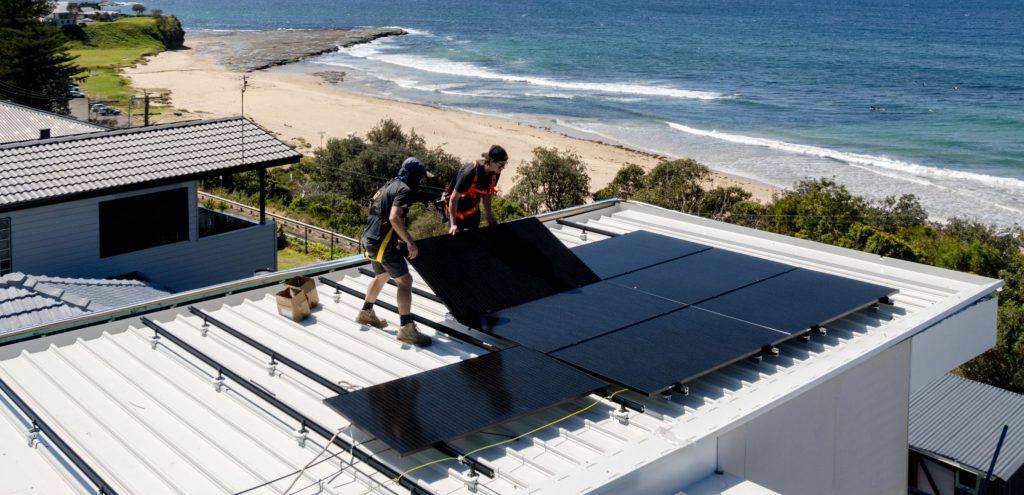
If you’re considering a home battery, one of the first things to understand is how solar, batteries and the electricity grid actually work together.
The good news is that the basic concept is quite simple.
Solar generates the energy
During the day, your solar panels generate electricity whenever there is sufficient sunlight.
Your home uses that solar energy first. If your solar system is generating more electricity than your home needs at that moment, the excess energy has to go somewhere.
Without a battery, much of that excess solar is exported back to the electricity grid. With a battery, that excess solar can instead be stored for later.
Solar produces energy -> your home uses what it needs -> excess solar charges the battery -> the battery supplies your home later.
The inverter is what actually manages that whole flow, so it’s worth understanding how solar inverter sizing works too.
Why store solar instead of exporting it?
The main reason is that electricity is generally worth more to you when you use it yourself than when you export it.
During the middle of the day, your solar system may be producing plenty of electricity while nobody is home. Later in the afternoon and evening, solar production falls away just as household electricity use often increases.
Without a battery, you may export solar during the day and then buy electricity back from the grid later. A battery helps change that.
Instead of exporting all your excess solar, you can store some of it and use it later when you actually need it. This can reduce the amount of electricity you need to purchase from the grid.
Exactly how big that battery should be is a separate question — one we cover in detail in what size home battery you actually need.
A battery doesn't only have to charge from solar
This is something many homeowners don’t initially realise. Modern home batteries can often also be charged from the electricity grid.
At first, that might sound counterproductive. Why would you buy electricity from the grid to put into a battery?
The answer is when you buy it.
Some electricity plans offer significantly cheaper electricity during certain periods of the day or night. Depending on your electricity plan and battery system, it may be possible to charge the battery when grid electricity is cheap and then use that stored energy later when electricity is more expensive.
Charge when electricity is cheap -> store the energy -> use it when electricity is expensive.
This can be particularly useful during periods when your solar system isn’t producing enough energy to fully charge your battery.
What happens in winter?
Winter is a good example.
Your solar system will generally produce less electricity during winter because the days are shorter and there are fewer hours of strong sunlight. Depending on the size of your solar system, your electricity usage, shading and weather conditions, there may be days when your solar system doesn’t completely recharge the battery.
That doesn’t necessarily mean the battery isn’t useful. A properly configured system may be able to supplement solar charging with cheaper grid electricity.
For example, your battery might charge during a low-cost electricity period and then supply your home later in the evening when grid electricity would otherwise cost more.
This flexibility is one of the biggest advantages of combining solar, batteries and the grid rather than thinking of them as three separate systems.
Does having a battery mean going off-grid?
Usually, no. And for most homeowners, going completely off-grid isn’t necessarily the objective.
A typical residential solar and battery system remains connected to the electricity grid. Think of the grid as another energy source available to your home when required.
On a good solar day, your home might generate most of the electricity it needs itself. During the evening, you may draw energy from the battery.
If the battery eventually reaches its minimum charge level, your home simply begins drawing electricity from the grid again.
The objective for most households is not necessarily to eliminate the grid completely. It is to reduce unnecessary dependence on it.
That can mean using your own solar energy wherever possible, storing excess solar for later, purchasing less electricity during expensive periods and using cheaper grid electricity more strategically when it makes sense.
Depending on the battery and how the system is configured, battery backup can also provide additional protection during certain grid outages.
Think of it as one home energy system
The best way to think about solar and batteries is not as separate products. They are parts of the same home energy system.
Solar generates electricity. Your home uses that electricity. Your battery stores excess energy for later. And the grid remains available when you need it.
When all four elements are designed and configured properly, the result can be lower electricity bills, greater energy independence and more control over how and when your household uses energy.
Thinking about solar and battery storage?
At AG Solar, we look at your home energy system as a whole rather than simply recommending a particular battery or solar package.
Based in Caringbah, AG Solar has extensive experience designing, installing and supporting solar and home battery systems throughout the Sutherland Shire, Southern Sydney, Wollongong and the Illawarra.
We consider your electricity usage, existing solar, available roof space, electricity tariff and what you actually want the system to achieve. Not every battery on the market handles this equally well, which is why it’s worth understanding how to compare home batteries properly before you choose one.
If you’d like to understand what a well-designed solar and battery system could look like for your home, speak with the AG Solar team.
